
British Airways Flight 009: A Miracle in the Sky

In 1982, a Boeing 747-200 — the largest passenger aircraft at the time — faced an unprecedented emergency. All four engines stopped mid-flight, leaving the plane gliding over the Indian Ocean in total silence.
The incident happened due to an unexpected encounter with volcanic ash, which pilots and aviation authorities were not yet trained to detect or avoid.
A Calm Voice During Chaos
Captain Eric Moody made a now-legendary announcement to the passengers: “Ladies and gentlemen, this is your captain speaking. We have a small problem. All four engines have stopped. We are doing our damnedest to get them going again. I hope you are not too distressed.”
What Went Wrong?
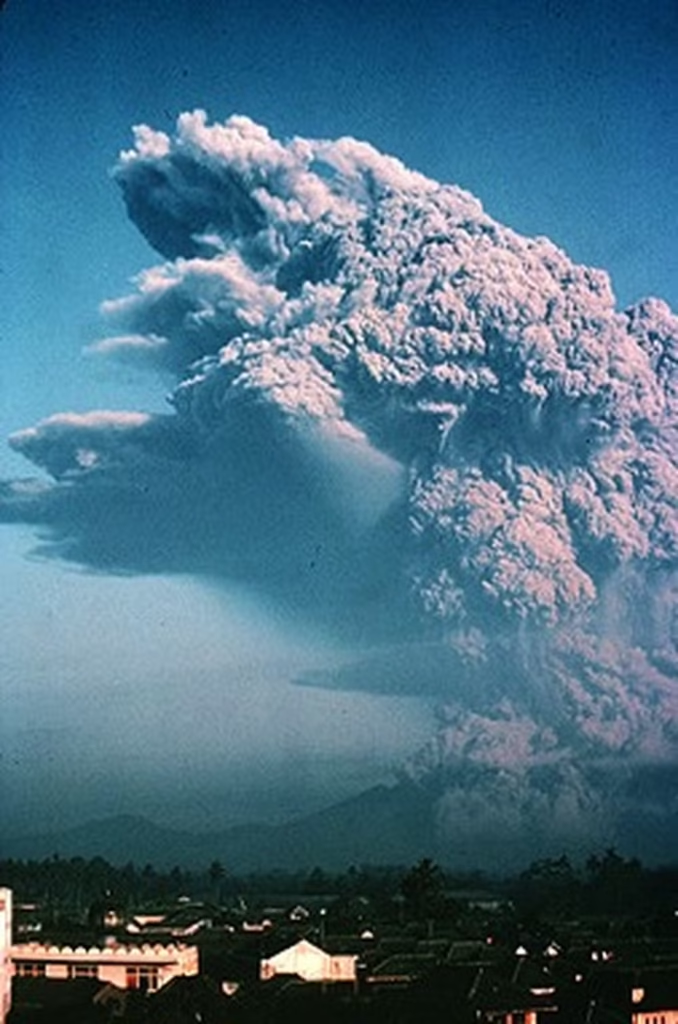
The aircraft unknowingly flew through a cloud of volcanic ash emitted by the erupting Galunggung volcano in Indonesia. This ash was invisible to radar and extremely damaging to jet engines.
As the engines failed one by one, the aircraft became a glider at 37,000 feet. Pilots had approximately 23 minutes to find a solution before crashing into the ocean.
A Last-Minute Recovery
After multiple restart attempts, one engine came back to life — then another — until finally, all four were functioning again. This allowed the crew to climb above a mountain range and make a difficult but safe landing in Jakarta.
The Aftermath
It was later discovered that volcanic ash had melted inside the engines, blocking airflow. Once the aircraft descended and left the ash cloud, cool air allowed the engines to restart.
The incident led to major reforms in aviation safety, including how pilots are trained and how volcanic activity is monitored and communicated to flights globally.
Lessons That Saved Lives
- Volcanic ash is now treated as a severe flight hazard.
- Weather and geological monitoring systems were improved worldwide.
- Pilot training now includes volcanic ash scenarios.
This story reminds us of the importance of pilot composure, training, and modern safety systems — and how a calm voice and quick thinking saved 263 lives.




Leave your comment